
Lanturn’s Blog
Why Our Projects Fail. And How to Keep them Going

We often consider failing on a goal a personal failure: “I needed more discipline, or motivation.”
But if we look at our project goal with a little detachment, as a strategy that gets us from where we are to where we want to be, then we may be able to debug and fix the failure mode.
Here is a simple model of goal pursuit. All you need is the goal, a way to get there, and the means to get there.
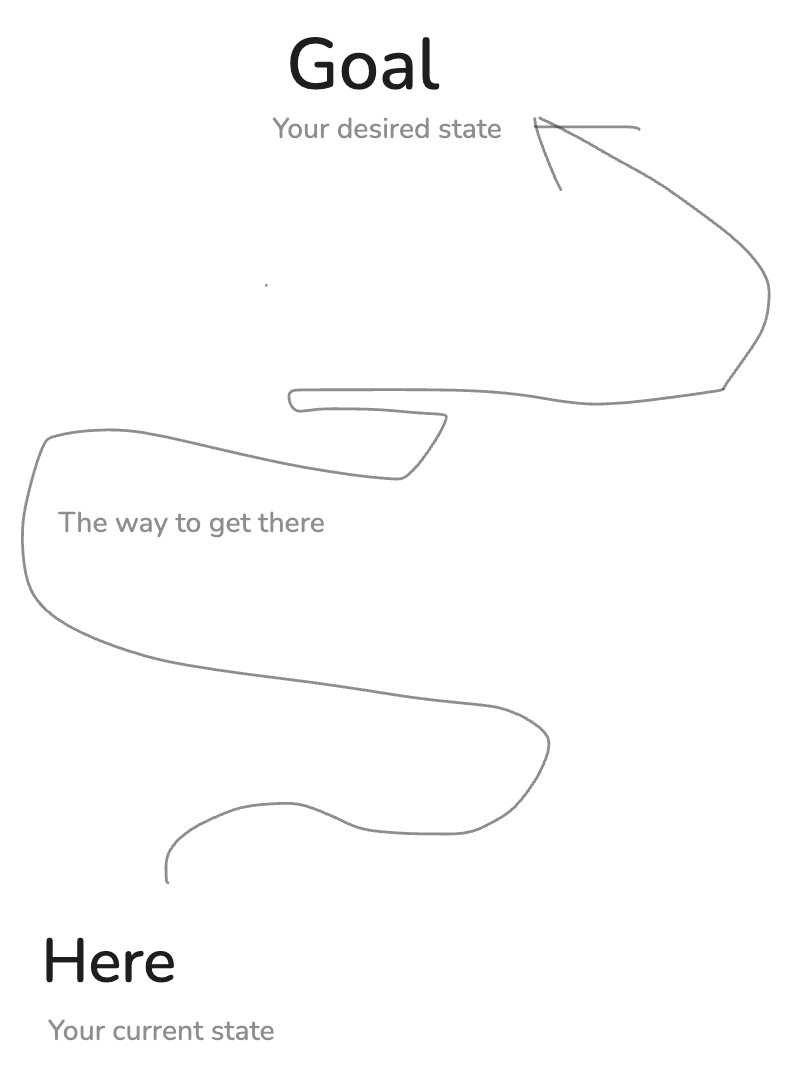
From here, there are only three ways you can fail on the goal:
First failure: we actually don't know where the goal is. If you don't know exactly where to point your effort, you automatically will fail. You wouldn't even know how to start.
Let's say your goal is to write a book. If you don’t know the genre, the main theme, your style, it is almost impossible to start writing any chapter.
Second failure: you are clear on the goal, but you have no idea how to complete it. And that's very common for any type of project we’ve never done before. On your first book, you don’t know how to construct the outline, define character arcs, or setup a consistent writing routine. And when the shape of the process is unknown, you may struggle to make any meaningful progress.
Third failure: you have a clear goal, you know how to get there, but you lack motivation or resources. Here, if you struggle to maintain your writing routine, the book will stay unfinished.
So here we go.
Three failures: not knowing the goal, not knowing the way, and not being able to do the way. In all three cases, you may feel stuck to make progress. But knowing the root cause of why you are stuck, can help you solve it.
I’ll discuss the specifics in future posts, but here is the short version of the solutions:
Not knowing the goal (or the current goal is not quite right): To get a clear picture of where you want to get to, define the why first. When you know what do you want to get out of the goal, the possible solutions become easier to brainstorm. You may also clarify the principles and values that govern the goal to make the definition even crisper.
Not knowing the way: Here, you don’t need to have the plan all figured out. Think about what is the first milestone that helps you make progress, and helps you discover the path forward. Doing some research, experimentation, or skill building helps you gain enough knowledge to proceed.
And you are not able to do the way. This one is often easier to fix than you think. For any goal, you may do parts that are repetitive, boring, or you don’t have time for. Here, I would push against the general advice to push through with discipline. That works some time, but it’s rarely sustainable :) Instead, engage in creative problem solving. What about the process is not working for you? How can you find a way around it, that feels aligned with you?
Bottom line is, if something is not working, but you still want to do the goal. Take a step back to diagnose, and see if there are other options to approach the goal.